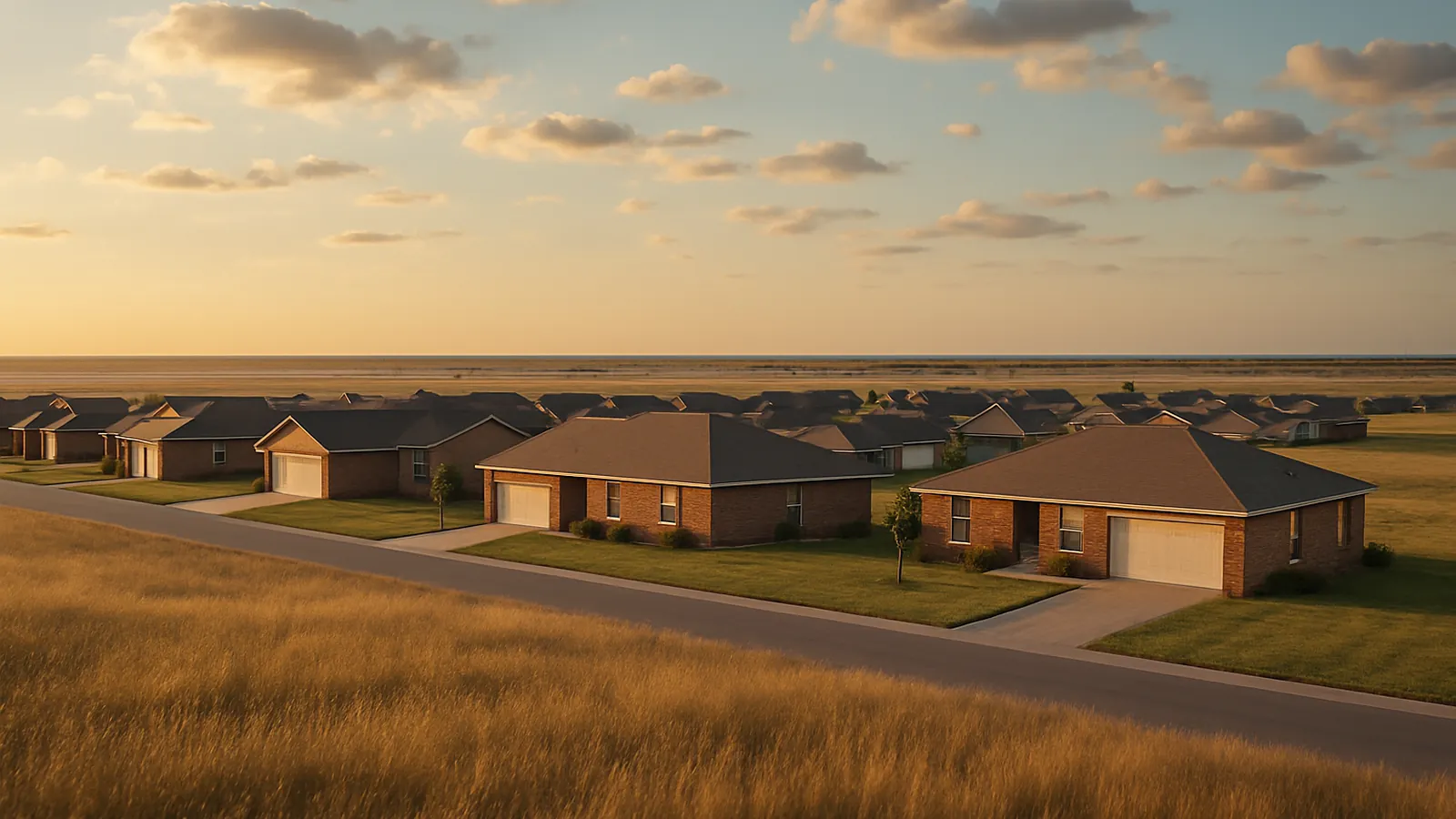
Foundation repair in Lowell runs $4,000–$15,000, and about 47.2 inches of precipitation a year is the driver. Concentrated water on Ozark ground carries soil into limestone fractures and removes bearing. Drainage and structural work are priced separately.
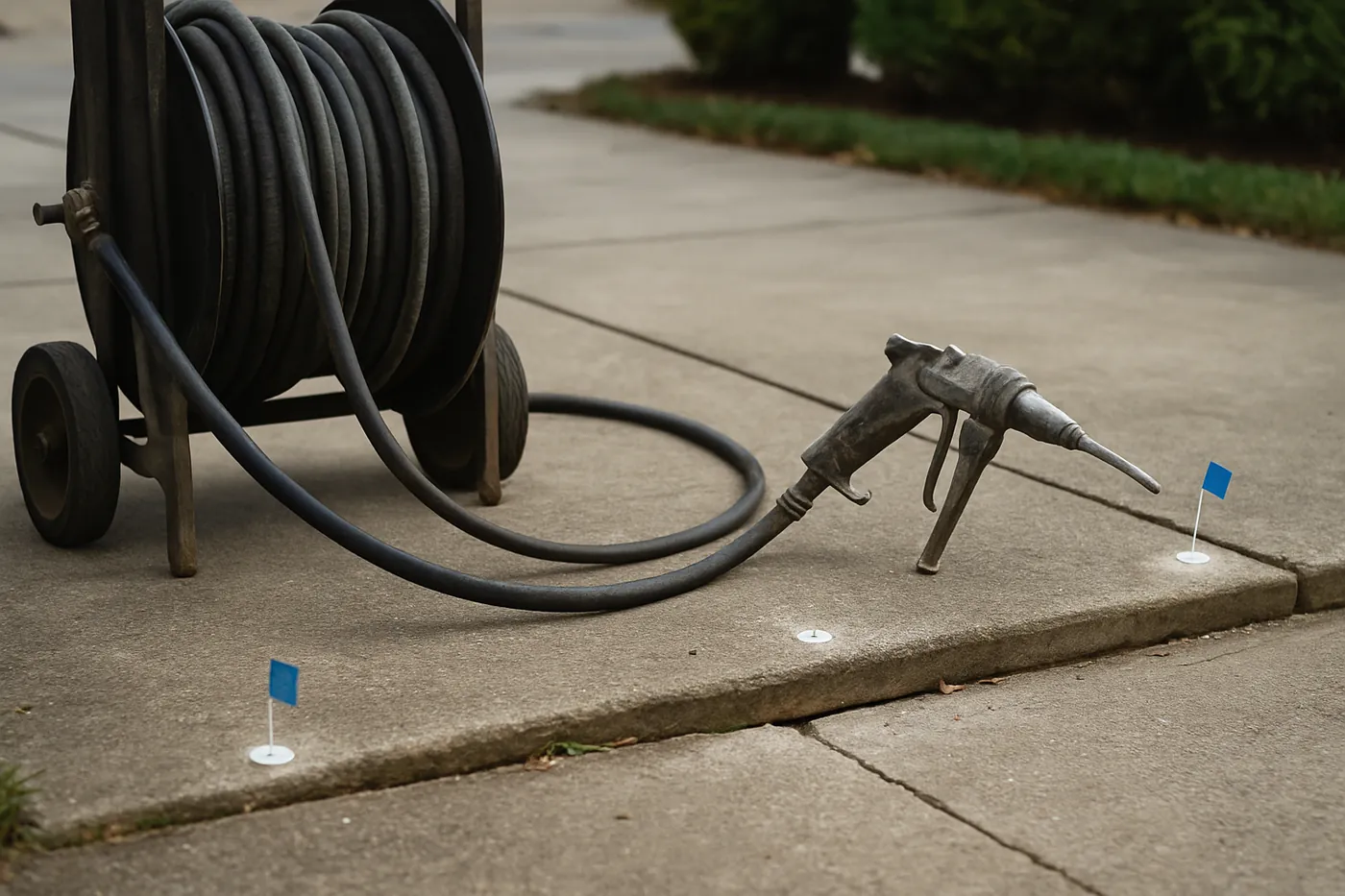
Fast conversion, recent fill
Lowell sits in the middle of the corridor that absorbed the most growth in Northwest Arkansas, and much of its residential development happened quickly on land that had been farmed. Rapid conversion means a lot of grading, and grading on rolling ground means engineered fill under a substantial share of the housing.
Fill is not a defect. Fill compacted to specification performs indefinitely. Fill placed in a hurry, in weather that did not cooperate, or without the testing the specification called for consolidates under the weight of the house for years afterward — and nobody can tell which kind is under your slab by looking at the finished yard.
Why helicals come up often in Lowell
When the suspected condition is variable fill, a pier that reports what it is finding as it advances is worth more than one that simply stops when it stops. Helical piers are turned in to a measured torque, and torque correlates to capacity, so each pier produces a number describing the material it is actually in.
That does not make them automatic. Heavier brick homes often suit driven piers better, and the right choice comes out of the elevation survey rather than out of whatever a company prefers to sell. Both are priced in the cost guide.
Asked in Lowell
How much does foundation repair cost in Lowell?
Most repairs run $4,000-$15,000, with helical piers at $1,400-$3,200 each coming up often because so much Lowell housing sits on engineered fill. Helicals report bearing capacity through torque as they advance, which is worth having when the material below is variable.
How do I know if my house is on fill?
Look at the terrain and the age of the subdivision. A level pad on rolling ground means material was cut from one side and placed on the other. Grading plans are sometimes available from the city or the builder, and movement concentrated on the downhill half of the footprint is the practical evidence.
Is fill settlement covered by anything?
Not by a standard homeowners policy, which excludes earth movement including settling. A builder warranty may still apply if the house is young enough, and grading and drainage are commonly covered items. Documentation is what makes that claim work, and our evaluation produces it whether or not we do the repair.
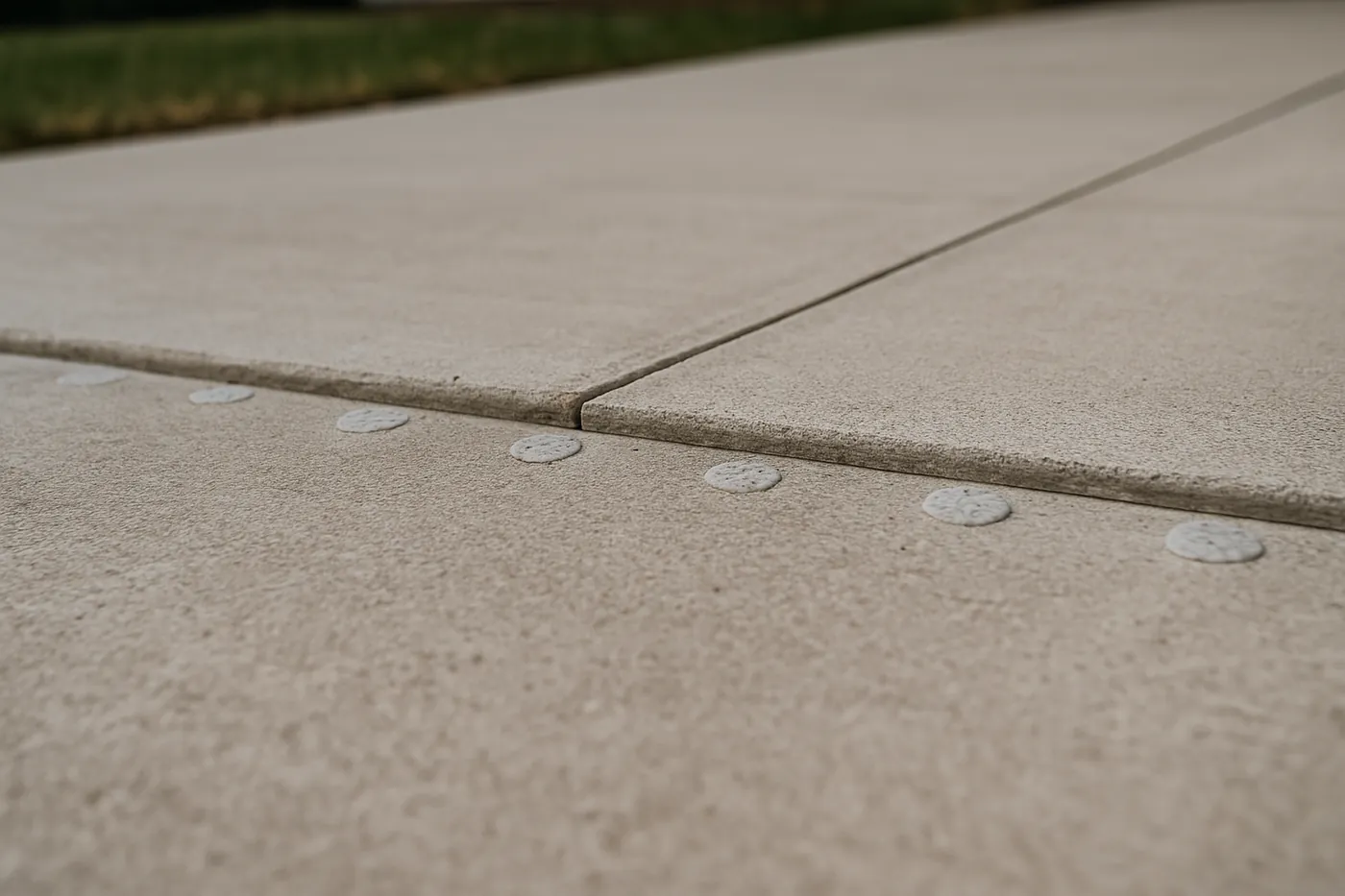
Free evaluation in Lowell and across Northwest Arkansas
No charge for the visit, the elevation survey, or the written scope. If the readings are flat and your cracks have not moved through a full wet-and-dry cycle, that is what the report will say — and on this ground, knowing that is worth an hour.
Get a free Fayetteville foundation evaluation
Tell us what the house is doing — a crack that keeps growing, a door that quit latching, a floor that dips toward one corner — and we’ll schedule an evaluation with floor elevation readings and photos. We reply the same business day.