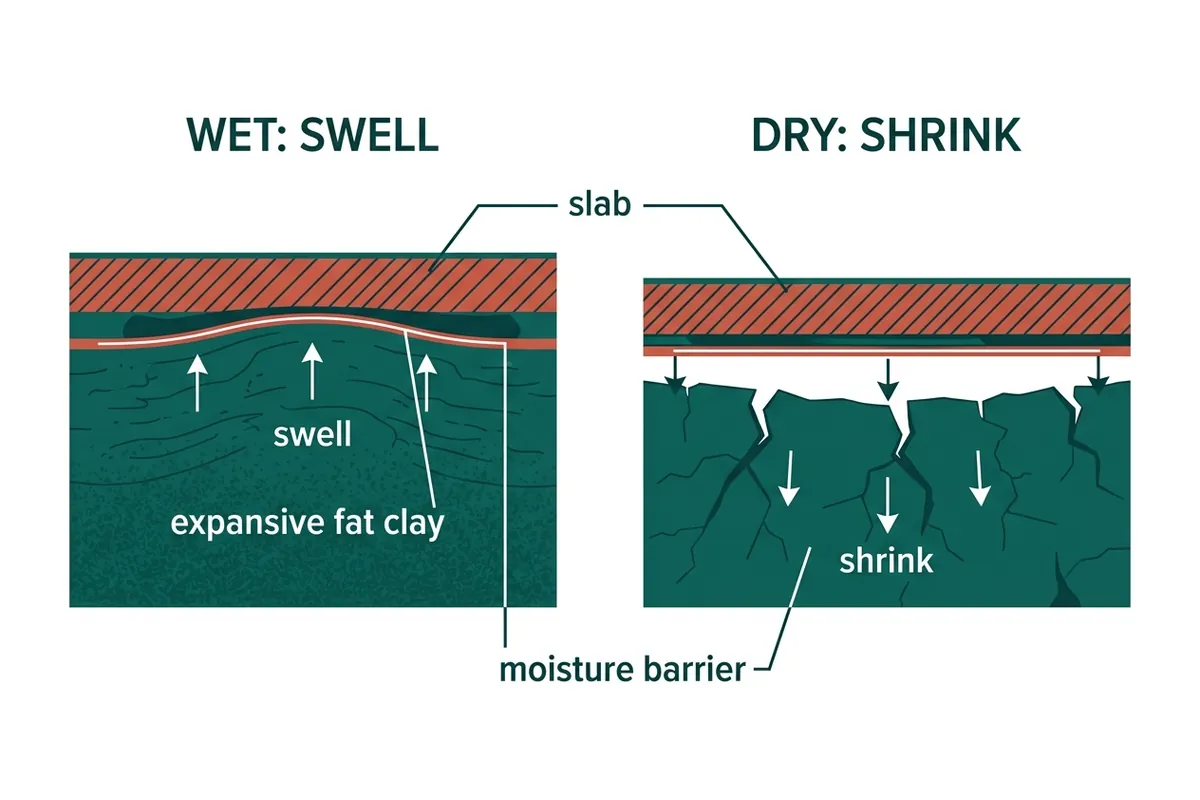
Foundation crack repair in Fayetteville costs $400–$1,500 where the structure is stable. The diagnostic question here is which mechanism made it: clay pockets cycling with moisture produce cracks that open and close seasonally, while soil loss into karst produces cracks that only widen.
How to read the crack yourself over a few weeks, which patterns are structural, and when sealing is the wrong first move.
Read the crack before you fill it
A crack is a record. Filling it erases the record. Before anyone injects anything, mark both ends with a dated pencil line, write the width beside it, and photograph it. Repeat monthly. Two or three readings will tell you more about your house than any single inspection, including ours.
What you are looking for is direction. A crack that measures wider in September and narrower in April is tracking soil moisture, which points at a clay pocket rather than at lost support. A crack that measures wider every time, especially with one side displaced above the other, is tracking something that is not coming back.
The patterns that matter in Northwest Arkansas
- Stair-step in brick or block, widening toward one end — differential settlement. The wide end is the end going down.
- Horizontal crack in a foundation wall — lateral pressure, often from saturated backfill on a hillside lot. Treat as urgent.
- Diagonal cracks from window and door corners — the frame is racking because the footing beneath it moved.
- Vertical crack, tight, no displacement — commonly shrinkage. Seal for water, monitor for change.
- Floor slab crack with one side higher — displacement means support is uneven underneath. This is a slab question, not a crack question.
Repair methods and what each one is for
| Method | Typical cost | Right when |
|---|---|---|
| Epoxy injection | $400–$900 per crack | Structural crack in poured concrete, movement confirmed stopped |
| Polyurethane injection | $400–$1,000 per crack | Water is coming through and slight future movement is expected |
| Carbon fiber straps | $600–$1,500 per strap | Wall is bowing modestly and needs restraint, not lifting |
| Surface seal only | $150–$400 | Hairline shrinkage cracking with no displacement |
| Address the cause first | See piering | Elevation readings show the house is out of level |
When crack repair is the wrong purchase
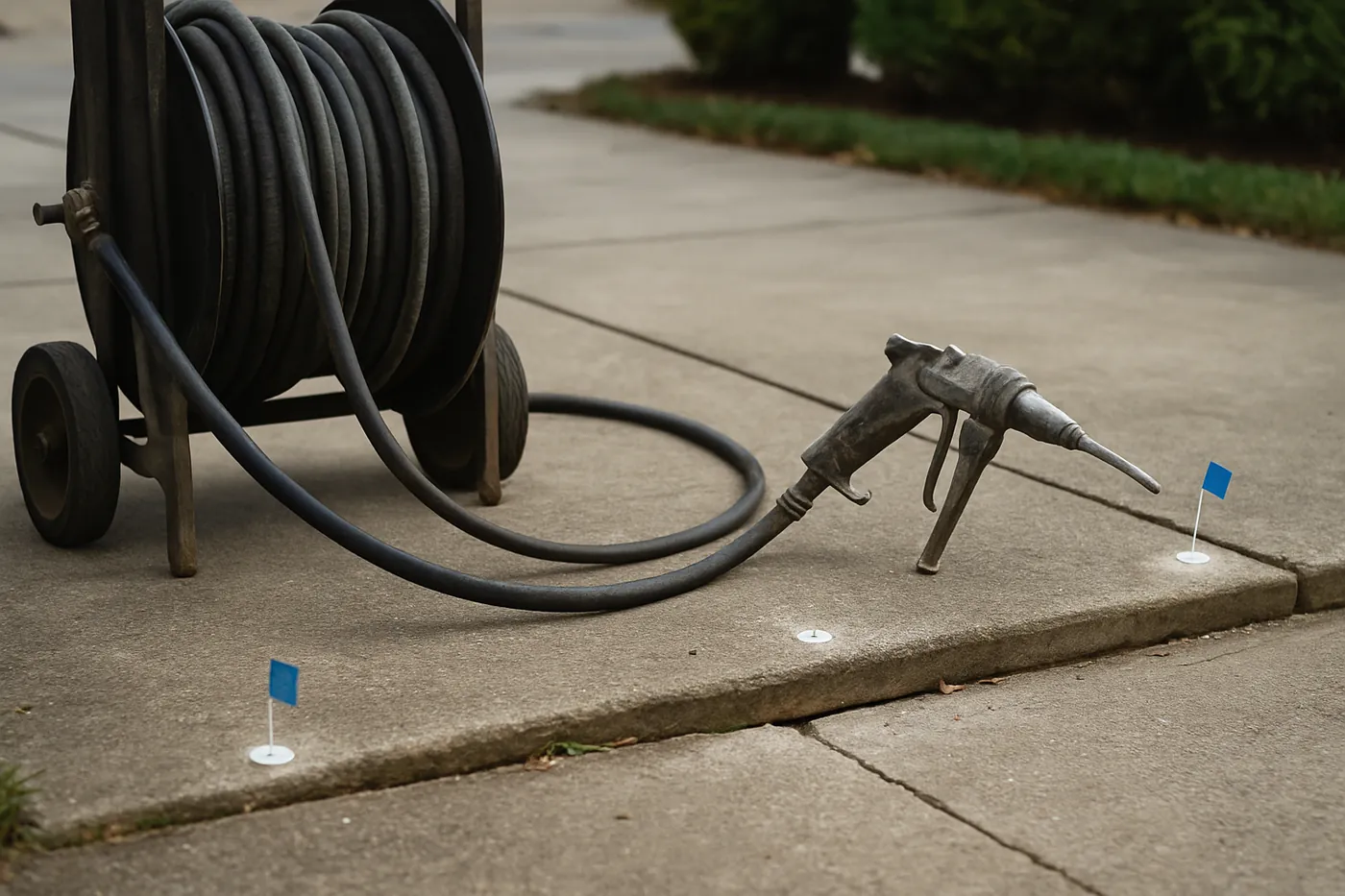
If a floor elevation survey shows an inch and a half of drop across the room, the crack is a symptom being sold to you as a problem. Injection will hold until the next season of movement and then split, usually within the same line. We run elevations on every crack call for exactly this reason, and if the readings are flat we will tell you the crack is cosmetic and quote it as such. Everything is priced in the cost guide.
Crack questions, straight answers
What does foundation crack repair cost in Fayetteville?
Crack repair generally runs $400-$1,500 for injection or sealing work where the structure is otherwise stable. That price assumes the crack is the whole problem. If floor elevation readings show the house is out of level, sealing the crack is cosmetic work on a structural condition and the real number belongs to piering or void filling.
Which cracks in Northwest Arkansas are serious?
Stair-step cracks in brick or block that widen toward one end, horizontal cracks in a foundation wall, and any crack that keeps growing between seasons. Cracks that open in late summer and close again in spring usually indicate a clay pocket cycling with moisture. Cracks that only ever widen usually indicate support that is being lost and not coming back.
How do I tell a clay crack from a karst crack?
Time. Mark both ends of the crack with a dated pencil line and measure the width monthly. Clay-driven cracks breathe - wider in a dry stretch, narrower after a wet one. Loss-of-support cracks move one direction only and often accelerate. Two or three months of measurements answers a question that no single visit can.
Do hairline cracks in a new slab matter?
Usually not. Concrete shrinks as it cures, and fine map-pattern cracking in the first year is normal on new Northwest Arkansas construction. What matters is whether the crack has vertical displacement - one side sitting higher than the other - and whether it grows. Displacement plus growth is a structural signal regardless of width.
Should I seal a crack myself?
Sealing a stable, non-displaced crack is reasonable homeowner work and helps keep water out. Do not seal a crack you have not measured over time, because filling it destroys the record of whether it is moving. Measure first, seal second - and if the width changes after sealing, the sealant has just given you a very clear answer.
Get a free Fayetteville foundation evaluation
Tell us what the house is doing — a crack that keeps growing, a door that quit latching, a floor that dips toward one corner — and we’ll schedule an evaluation with floor elevation readings and photos. We reply the same business day.