Foundation repair in Fayetteville costs $4,000–$15,000 for most full repairs, $3,500–$12,000 for slab work, $1,200–$3,000 per pier, $1,500–$6,000 for drainage, and $400–$1,500 for crack repair. A floor elevation survey sets which applies.
What each range buys, the two variables nobody can price up front on Ozark ground, and how to compare two very different bids.
Fayetteville foundation prices by job
| Job | Typical range | What it covers |
|---|---|---|
| Full repair with piering | $4,000–$15,000 | Survey-designed pier layout, driven to competent bearing, load tested, lift to target, per-pier logs |
| Individual piers | $1,200–$3,000 each | Push piers, by structure weight and access |
| Helical piers | $1,400–$3,200 each | Torque-installed, capacity recorded per pier — light structures, additions, fill |
| Slab repair | $3,500–$12,000 | Perimeter support, releveling, and cosmetic restoration after movement stops |
| Void filling under a slab | Priced by measured volume | Probing, port drilling, injection, and take recorded — rate quoted, total measured |
| Drainage correction | $1,500–$6,000 | Downspouts, regrading, French or curtain drains, interior drain and sump |
| Crack repair | $400–$1,500 | Epoxy or polyurethane injection, carbon fiber straps where a wall needs restraint |
| Concrete leveling | $500–$2,500 | Polyurethane lifting for drives, patios, walks, and porch slabs |
The two numbers nobody can fix in advance here
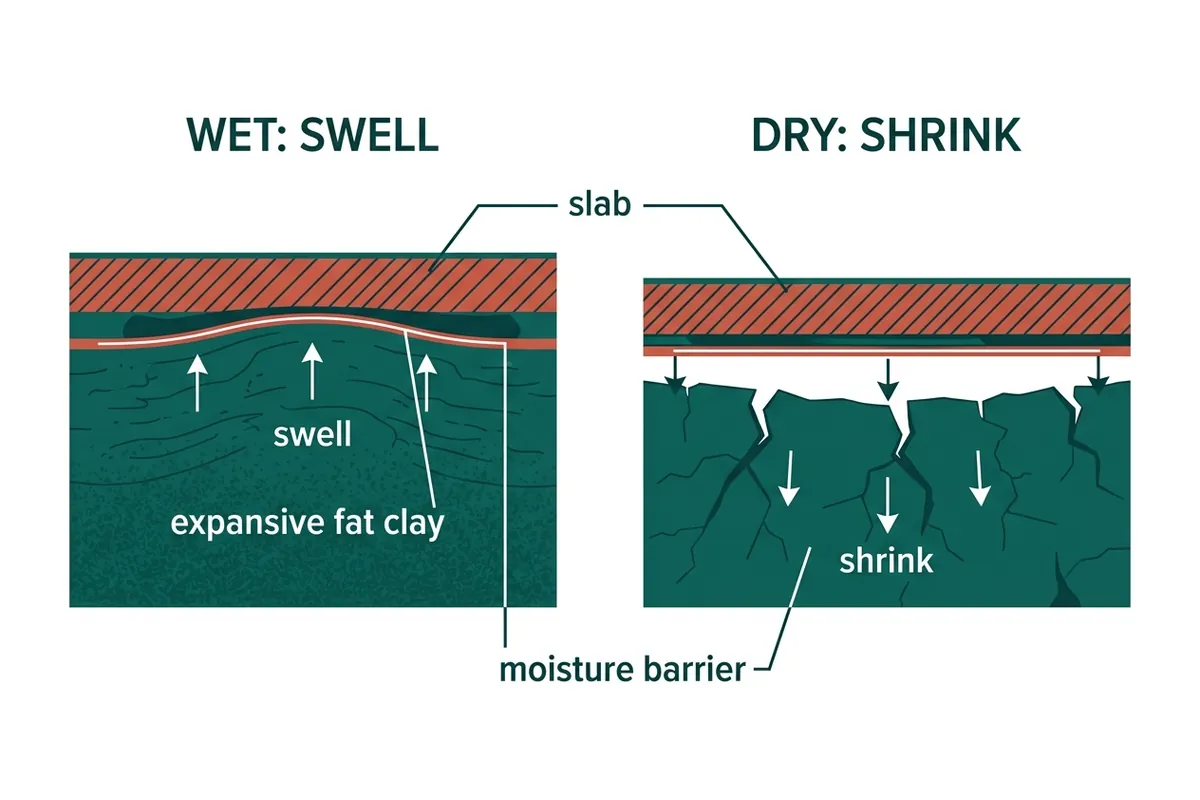
Pier depth. The Ozark limestone surface is pinnacled — sound rock high in one place, a soil-filled channel a few feet away. A pier may reach competent bearing quickly or drive well past the assumption. Any bid stating a firm depth for your house before driving anything is stating an average.
Void volume. Nobody knows how much empty space is under a slab until it is probed and material take is recorded. Priced honestly, void filling is a rate times a measured quantity.
Neither of these is a reason to accept an open-ended contract. The protection is to require both in writing before work starts: a stated depth assumption with a per-foot rate beyond it, and a stated void-filling rate with the measurement method named. Then a deeper drive or a larger void is arithmetic you already agreed to rather than a conversation held with equipment in your yard.
What actually moves your estimate
- Pier count — set by how much of the footprint reads low, not by how many cracks you can see
- Depth — the biggest single variable on this ground, and lot-specific
- Access — tight urban lots and steep hillside sites cost more to work
- Lift versus stabilize — stopping movement costs less than recovering elevation
- Void filling — present on some slab jobs, absent on most pier-only jobs
- Interior finish restoration — usually a separate trade and a separate number
How to compare two bids honestly
Put them side by side and check that they describe the same house. A bid with eight piers and a bid with sixteen are not competing prices; they are competing diagnoses, and one of them is wrong. Ask both companies for the elevation readings that produced the count.
Then check the four items that make prices comparable: the depth assumption and overage rate, whether load testing is performed, whether void filling is included or excluded, and whether the target is lift or stabilization. Two bids that agree on all four can be compared on price. Two that do not are not the same purchase.
When the cheap answer is the right answer
Often, and we would rather say so than sell around it. On early movement with a near-flat survey, correcting where water goes genuinely is the whole repair — and on karst that is not a stopgap, because water is the mechanism that removes soil in the first place. Extending downspouts and rebuilding six feet of grade is a few hundred dollars and it is sometimes all that a house needs.
Phasing when the number is more than you planned
Where budget is the constraint, the order that protects you is: correct the water, stabilize the worst zone, finish the rest, repair cosmetics last. Nothing gets redone that way. What phasing must never skip is the water work — on this ground water is what carried the soil away, so leaving it uncorrected means the sections you did repair are being undermined while you save for the rest. Ask for scopes staged with fixed prices per stage; ours are written that way on request.
Cost questions, straight answers
What is the average foundation repair cost in Fayetteville?
There is no useful average because the job classes barely overlap. Drainage correction runs $1,500-$6,000, crack repair $400-$1,500, concrete leveling $500-$2,500, slab work $3,500-$12,000, and full piering repairs $4,000-$15,000. A floor elevation survey decides which class applies to your house, and it is free.
Why do two Fayetteville bids differ by thousands?
Usually pier count, pier depth, or whether void filling was included at all. Ozark bedrock is pinnacled, so depth varies across one lot and any quoted depth is an assumption. Ask each company for the elevation numbers behind the pier count, the depth assumption, the per-foot rate beyond it, and whether void filling is in or out.
Why will nobody give me a firm price for void filling?
Because the volume of an underground space cannot be known until it is probed and injected. Void filling is legitimately priced by measured material take, and a company quoting a firm total before probing is either padding heavily or planning a change order. What you should get in writing is the rate, the probing method, and how the take is measured.
Does insurance pay for any of it?
Rarely. Standard policies exclude earth movement, which covers both karst-driven soil loss and clay movement, and sinkhole collapse is typically excluded too. The exception that pays is damage from a sudden accidental plumbing discharge under the slab. That distinction is worth a plumbing isolation test before you spend anything.
Can the work be phased?
The work can be phased, and there is a right order here: correct the water first, fill and stabilize the worst zone next, finish the rest and the cosmetics last. Water control comes first because on karst the water is what removes soil, and skipping it means new work gets undermined the same way the old work did.
Do you charge for the evaluation?
We don't charge for the evaluation. The floor elevation survey, dated crack measurements with photographs, exterior water assessment, and written scope with fixed line prices are all free - including the visits that end with 'extend two downspouts and rebuild the grade on the north side.'
Get a free Fayetteville foundation evaluation
Tell us what the house is doing — a crack that keeps growing, a door that quit latching, a floor that dips toward one corner — and we’ll schedule an evaluation with floor elevation readings and photos. We reply the same business day.