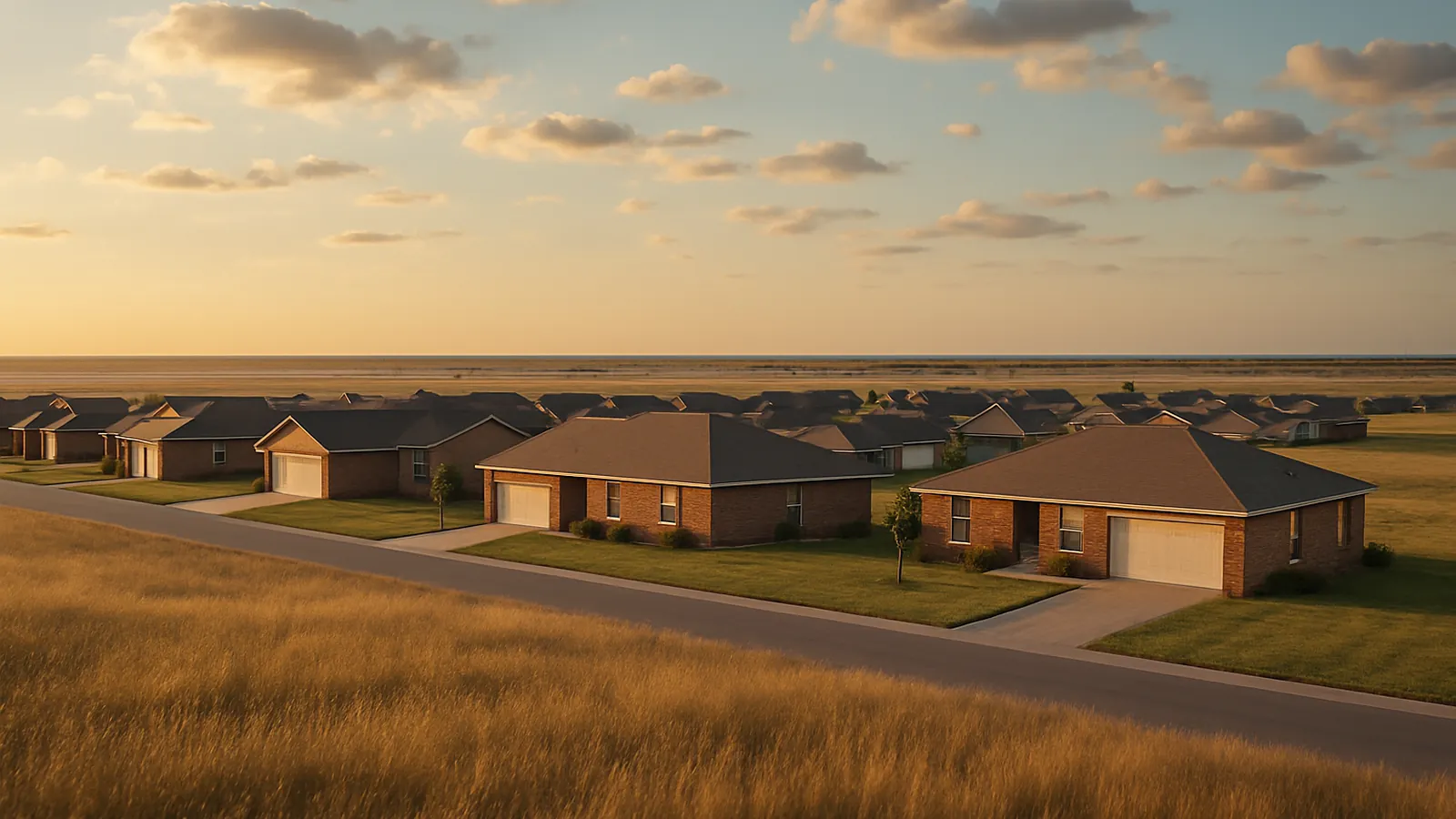
Drainage correction in Fayetteville runs $1,500–$6,000. It matters more here than in most markets because concentrated water on karst carries fine soil down into limestone fractures, so a bad downspout does not merely saturate ground — over years it removes the support under a foundation.
How water becomes an excavation problem on Ozark ground, what to fix first, and when drainage alone is enough.
Water on karst does something extra
Roughly 47.2 inches of precipitation falls on Fayetteville in an average year. Where it lands matters far more than how much of it there is. Water spread across a yard soaks in and moves slowly. Water delivered to one point — the base of a downspout, a low corner, a utility trench that was backfilled loose — infiltrates fast and follows the path of least resistance.
On the Ozark Plateau that path frequently leads into fractured limestone. The water goes down, and fine soil goes with it. This is why a drainage defect that would produce a damp crawl space in another state can, over a decade here, produce a genuine loss of bearing under a footing.
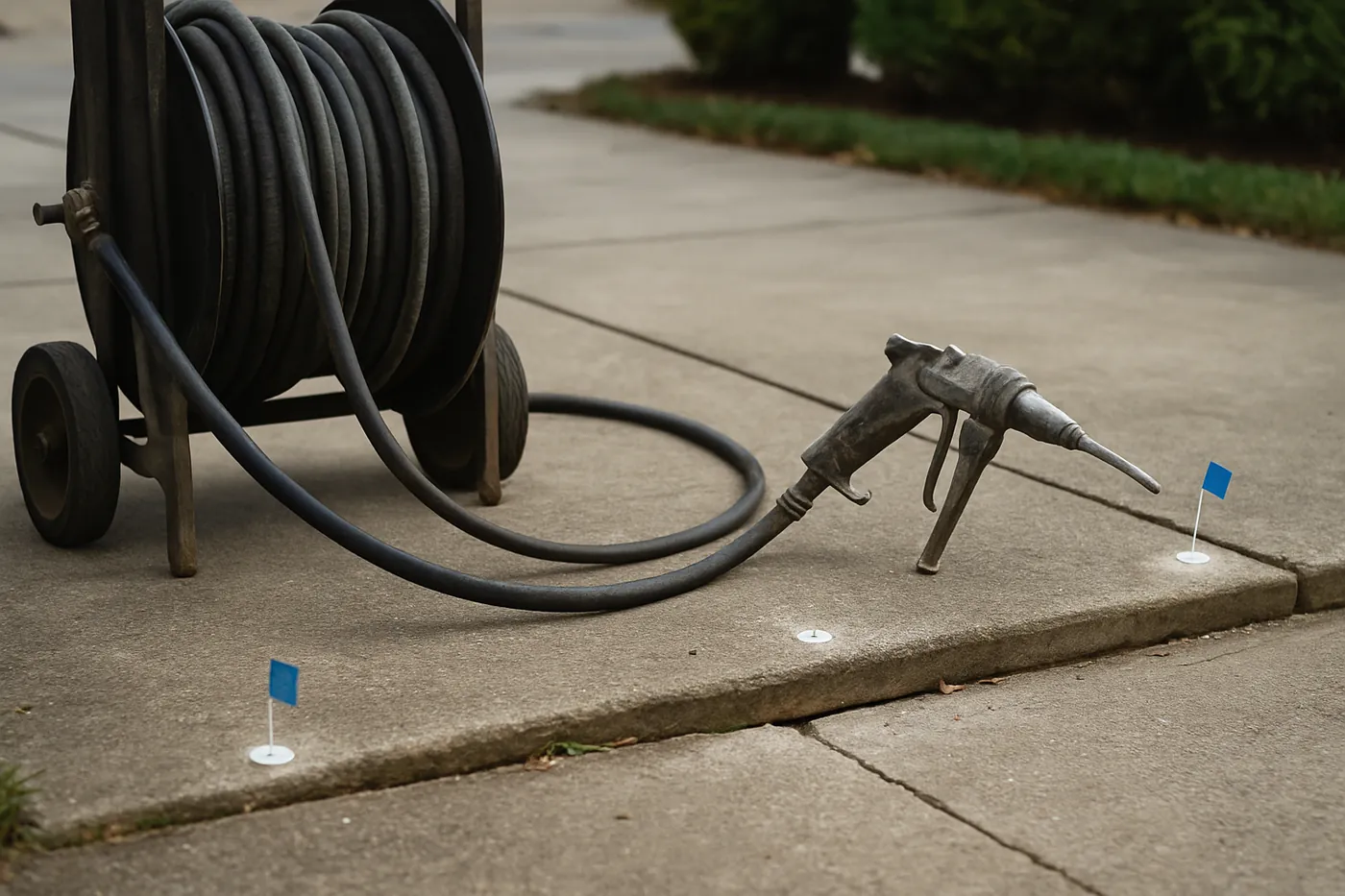
Fix these in this order
- Downspout discharge. Get roof water well away from the backfill zone. This is the single highest-return item and it is often under $300.
- Negative grade. Soil should fall away from the house over the first six feet. Settled backfill that has reversed the slope funnels water straight down beside the footing.
- Gutter capacity. An overflowing gutter delivers water directly to the wall, which defeats a correct downspout run.
- Concentrated flow paths. On sloped NWA lots, look for where the neighbor’s runoff, a driveway, or a swale is aiming at your foundation.
- Subsurface interception. A French drain or curtain drain, once the surface items above have been handled and are not enough.
What the options cost
| Correction | Typical cost | Best for |
|---|---|---|
| Downspout extensions and splash management | $150–$600 | Nearly every house here; do it first regardless |
| Regrading the first six feet | $800–$2,500 | Backfill that settled and now slopes toward the house |
| French or curtain drain | $2,000–$6,000 | Sloped lots taking upslope runoff toward the foundation |
| Interior drain and sump | $3,000–$8,000 | Basements taking water that cannot be intercepted outside |
| Drainage plus piering | $4,000–$15,000 | Elevations already show meaningful drop; water control alone is too late |
When drainage alone is the right purchase
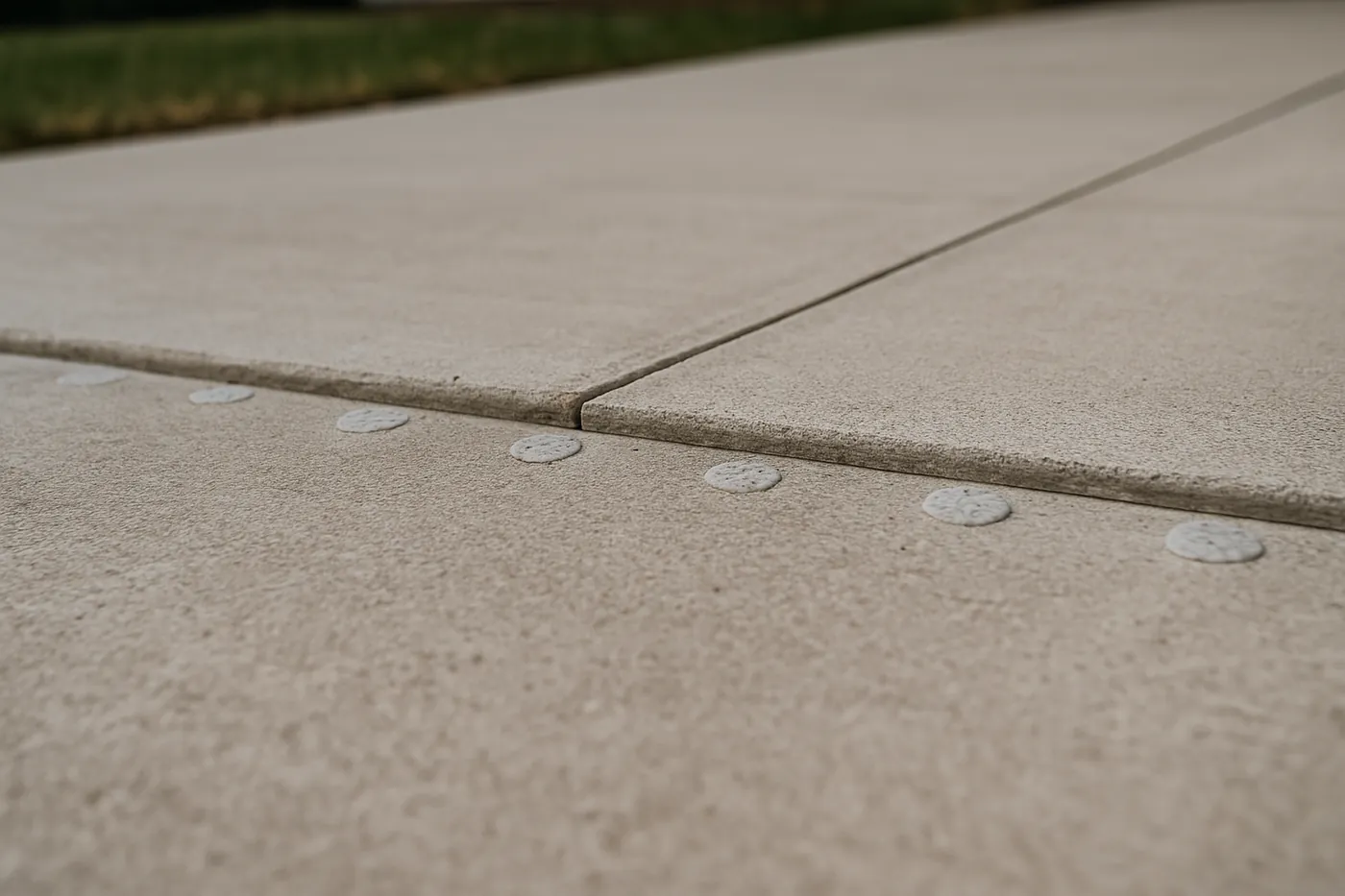
Early. If floor elevation readings are within a fraction of an inch across the footprint, cracks are hairline, and symptoms clearly worsen after heavy rain, controlling water can stop the progression before support is lost. Once readings show real drop, drainage becomes a necessary companion to structural work rather than a substitute for it — because the water that removed the soil will keep removing it around a new pier.
We report the elevations either way, including when they say you do not need us yet. See the cost guide for what the structural side runs if it comes to that.
Drainage questions, straight answers
What does drainage correction cost in Fayetteville?
Drainage work generally runs $1,500-$6,000 depending on how much water is being moved and how far it has to go. On a sloped Northwest Arkansas lot the cost is driven by where the water can legally and practically be discharged, since a downhill neighbor is not a drainage plan. Extending downspouts and correcting grade is often a few hundred dollars.
Why is drainage more urgent on karst than elsewhere?
Because concentrated water does not just soften soil here - it removes it. Water infiltrating at one point can migrate into limestone fractures and carry fine soil along, opening space beneath the foundation over time. On ordinary ground a bad downspout causes a wet crawl space. On karst it can quietly excavate.
Does a French drain fix foundation movement?
It addresses the cause when the cause is water, which in early cases is enough to stop the progression. It does not lift a house that has already dropped or restore soil that has already left. Drainage is the right first purchase when elevation readings are still close to flat and clearly worsening after wet weather.
Where should downspouts discharge on a hillside lot?
Far enough from the foundation that the water joins sheet flow rather than infiltrating at one point - generally well beyond the backfill zone, and never into a low spot beside the house. On a slope, discharge downhill of the structure and spread the flow. Concentrating a roof's worth of water at a single point beside a foundation is the most common preventable cause of movement we see.
Can I do any of this myself?
You can do any of this yourself, and the highest-value items are the cheapest. Extend downspouts, clear gutters so they do not overflow at the wall, and rebuild negative grade so soil falls away from the house over the first several feet. Those three steps address a large share of water reaching foundations here and cost far less than any repair they prevent.
Get a free Fayetteville foundation evaluation
Tell us what the house is doing — a crack that keeps growing, a door that quit latching, a floor that dips toward one corner — and we’ll schedule an evaluation with floor elevation readings and photos. We reply the same business day.